
Kenya is moving more of its land administration system away from paper files, physical payment processes and registry counters as the government expands ArdhiSasa and pushes digital processing deeper into land offices across the country.
The State Department for Lands and Physical Planning says ArdhiSasa, formally known as the National Land Information Management System, is now live in Nairobi, Murang’a, Mombasa and Isiolo, marking a gradual expansion of a platform first introduced in Nairobi in 2021. ([Lands Kenya][1])
At the same time, the government has rolled out the National Stamp Duty Module, or NSDM, countrywide, allowing stamp-duty assessments and payments to be processed digitally through ArdhiPay rather than relying on the older manual workflow. ([Lands Kenya][2])
The distinction is important.
It does not mean that every land registry in Kenya is already fully operating on ArdhiSasa. Full digital land services remain at different stages of rollout across the country. What has become national is the digital stamp-duty system, while the wider migration of title records, searches, transfers, survey information and other land services onto ArdhiSasa is still being expanded registry by registry.
That expansion is now becoming one of the most consequential changes taking place in Kenya's property market.
Government wants more of the land transaction to happen online
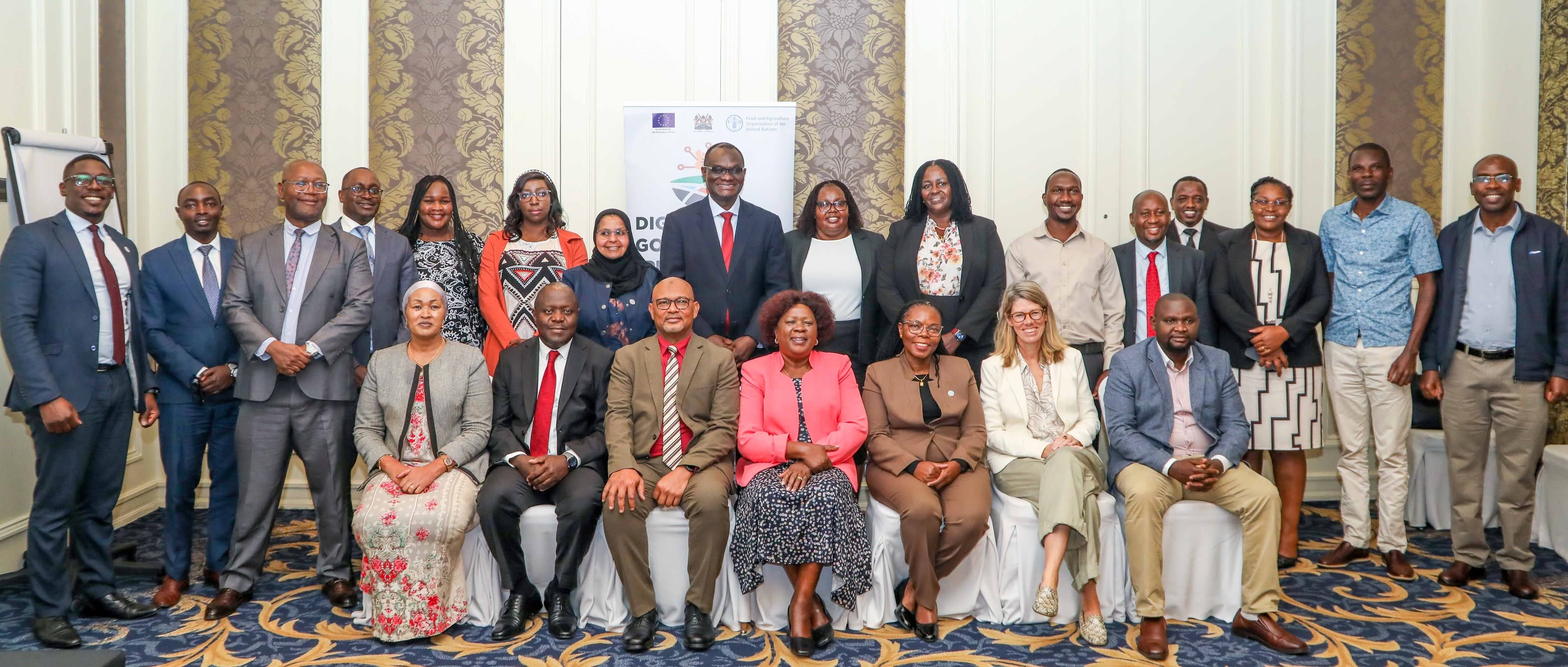
Speaking during a Digital Land Governance Programme advisory committee meeting in Nairobi on Thursday, Lands Cabinet Secretary Alice Wahome said technology had become central to the government's attempt to improve the way land services are delivered.
“Digital transformation is core to better and efficient service delivery,” Wahome said.
The ministry says more than 800 land officers have been trained on the National Stamp Duty Module, while 30 land offices have received ICT equipment and supporting infrastructure through the Digital Land Governance Programme. ([Lands Kenya][1])
ArdhiSasa itself is intended to create a common digital environment through which members of the public, professionals and government agencies can interact with official land information.
Its services cover areas including land registration, land administration, searches, transfers, charges, leases, valuation, survey and mapping, physical planning, adjudication and National Land Commission services. ([Ardhisasa][3])
For an ordinary property transaction, that could eventually mean substantially less movement between offices.
A buyer conducting a land search, an advocate processing a transfer, a bank registering a charge or a property owner seeking a particular land record can increasingly initiate and follow those processes digitally where the relevant records and registration section have been brought onto the system.
That is a considerable departure from a land administration system historically dependent on physical files and face-to-face processing.
Mombasa shows how the transition is being done
The rollout in Mombasa offers a useful view of how the national transition is actually happening.
Rather than switching an entire county onto ArdhiSasa overnight, the government has been digitising and onboarding individual registration sections.
Mombasa Blocks XVI and XVII were brought onto the platform in July 2025. In July this year, the State Department added more registration sections and directed that, from July 20, 2026, transactions involving the newly onboarded blocks would be processed exclusively through ArdhiSasa.
Manual processing for those sections was discontinued. ([Lands Kenya][4])
Isiolo has followed a similar approach. Blocks 1 through 10 were brought onto ArdhiSasa in July 2025, allowing services including searches, transfers and subdivisions to be initiated digitally. ([Lands Kenya][5])
Murang'a is also live, while Nairobi remains the most mature ArdhiSasa market following the platform's original launch there in 2021.
The pattern suggests that the national rollout will be less about a single launch date and more about the painstaking conversion, verification and migration of millions of individual land records from different registries.
That work is particularly sensitive because a land information system is only as dependable as the records behind it.
Errors in parcel details, ownership histories, registration sections or title conversions can have direct financial and legal consequences.
Stamp duty is moving faster than the wider ArdhiSasa rollout
One part of the digitisation programme has moved considerably further.
The National Stamp Duty Module is now available countrywide, according to the State Department.
Stamp duty is one of the key stages in a property transfer. Instead of the previous largely manual process, users can request an assessment electronically and make the required payment through ArdhiPay, which is connected to the government's digital payment infrastructure. ([Kenya News][6])
The ArdhiSasa platform currently lists payment options including M-Pesa, M-Pesa Express, bank payment, RTGS, Airtel Money and Pesaflow Direct. ([Ardhisasa][7])
The government argues that putting the process online should do more than save time.
Digital assessments and traceable payments can reduce manual intervention, create clearer audit trails and make it more difficult for payments or transaction records to disappear between offices.
For the government, there is also a revenue question.
Stamp duty represents a significant source of public revenue, and the State Department has repeatedly said automation should reduce leakages and improve accountability in its collection. ([Lands Kenya][8])
For property buyers and sellers, however, the more immediate concern is predictability: whether an assessment that once required repeated physical follow-ups can be completed within a known digital process.
The ambition extends beyond title searches and transfers
The wider programme supporting the changes is considerably larger than ArdhiSasa alone.
Kenya's Digital Land Governance Programme, backed by the European Union and the UN Food and Agriculture Organization, began in April 2022 and is scheduled to run until March 2027.
FAO previously put the value of its five-year second phase at approximately €20.85 million, with the programme designed to reach all 47 counties. ([FAOHome][9])
Its work includes digitisation, land-governance reform, dispute-resolution systems, institutional capacity and geospatial technology.
County governments are increasingly being encouraged to build GIS-based databases that can be used for physical planning, land management, infrastructure decisions and revenue administration.
In August, FAO and the EU launched a nationwide GIS training programme involving the Council of Governors and all 47 county governments, covering spatial databases, interoperability, digital workflows and GIS-based planning. ([FAOHome][10])
That matters because the eventual value of a national digital land system goes well beyond being able to download a search online.
If national government records, county planning information, cadastral data, valuation records and National Land Commission information can eventually communicate reliably with one another, land administration could become substantially easier to audit and understand.
For Kenya's property market, that is the much bigger prize.
But digitisation creates a new dependency: uptime
The government's renewed push comes with an immediate reminder that moving essential land services online also creates a different kind of vulnerability.
Just days before Thursday's meeting, ArdhiSasa suffered an outage that disrupted transactions.
The Law Society of Kenya said the system had been unavailable from September 1, affecting searches, transfers, registrations, valuations and other conveyancing work. The lawyers' body raised concerns about transactions facing deadlines and called for clearer communication and contingency arrangements when the platform becomes unavailable. ([Pulse Kenya][11])
The platform was subsequently restored.
The incident is significant because once a registration section becomes fully digital and manual processing is withdrawn, ArdhiSasa effectively becomes critical national property infrastructure.
A temporary outage is no longer simply an inconvenience.
It can delay completion of a sale, registration of a bank security, discharge of a charge, valuation, title transfer or another transaction involving significant amounts of money.
As ArdhiSasa expands, therefore, the standard by which it is judged will increasingly shift.
The question will no longer be simply whether a service has been digitised. It will be whether that service is available when required, whether applications can be tracked, whether errors can be corrected quickly and whether users have a workable fallback when the system fails.
What this means for property buyers
For buyers, the digital transition potentially addresses one of the most persistent weaknesses in Kenya's real-estate market: difficulty accessing consistent property information.
A functioning digital registry can make an official search easier to obtain, establish clearer transaction trails and reduce the amount of informal movement between different offices.
It can also make it harder for some forms of manipulation to survive unnoticed where ownership changes, restrictions, charges and other interests are properly recorded.
But digitisation should not be mistaken for the elimination of property risk.
An ArdhiSasa search remains one part of due diligence.
A buyer may still need an advocate to review the title and transaction documents, a surveyor to confirm boundaries where necessary, planning checks for the intended development, verification of rates or land rent, and further investigation where ownership, succession, subdivision or historical records are unclear.
A digital system improves access to the official record. It does not automatically guarantee that every underlying dispute or historical defect has disappeared.
For developers and lenders, transaction speed matters
The implications are equally important for developers and financial institutions.
Property development depends heavily on transactions that happen behind the scenes: registration of charges, transfers, amalgamations, subdivisions, searches, valuations, leases and discharges.
Delays at any one of those stages can hold up financing or postpone completion of a transaction.
For lenders, better-integrated digital records can make verification and registration of security more predictable.
For developers, faster and more transparent processing can reduce the amount of capital sitting idle while approvals and registrations move through the system.
Those benefits, however, depend on both the quality of the records and the reliability of the technology.
The next phase will be harder than launching the platform
Kenya has already crossed the easier conceptual hurdle: there is now broad acceptance that land administration should become digital.
The difficult part is execution at national scale.
The government still has to digitise enormous volumes of historical material, reconcile old and new title references, maintain accurate cadastral information, train staff, integrate institutions and provide support to property owners whose records do not transition cleanly.
It also has to bring counties with very different land-tenure patterns into the same wider digital ecosystem.
The State Department has not announced a single date by which every county will be fully live on ArdhiSasa.
Instead, the current approach points to a gradual rollout as individual registries and registration sections become ready.
The Digital Land Governance Programme itself enters its final year before its scheduled March 2027 completion, giving the government and its partners a relatively short window to consolidate the infrastructure and institutional changes already under way. ([FAOHome][12])
Representatives from the National Land Commission, Council of Governors, Environment and Land Court, European Union, FAO and other institutions attended this week's programme meeting, reflecting just how many separate organisations ultimately have to work together for the system to function.
That coordination may prove as important as the software itself.
For Kenya's property market, successful digitisation could eventually mean shorter transactions, better access to records, cleaner payment trails and a land system that is easier to interrogate before money changes hands.
The government has now put much of that architecture in place.
The next measure of success will be much simpler: whether Kenyans can use it consistently, confidently and at scale.
Continue reading
Related reporting
News · Residential
What a KSh200,000 salary can actually buy in Kenya
News · Infrastructure
Kiambu Road expansion could redraw Nairobi’s northern property map
News · Infrastructure